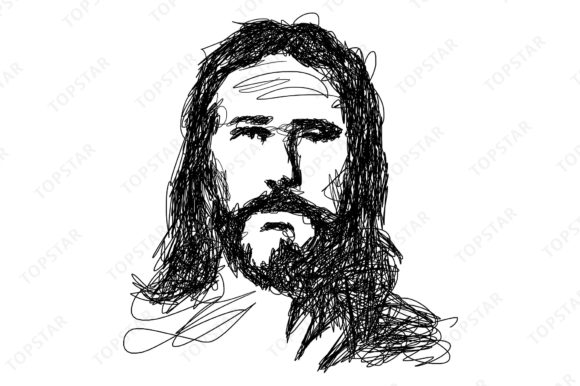
Jesus Christ Portrait Hand Drawn Art: A Guide to Evaluation and Selection
Jesus Christ portrait hand drawn art represents a specific category of religious illustration where the artist creates the image through manual techniques such as pencil sketching, charcoal rendering, pen and ink work, or pastel drawing, rather than using digital tools or photographic reproduction. Unlike mass-produced prints or AI-generated images, each hand drawn piece carries the distinct mark of human technique, from line variation to shading choices. For someone exploring this art form, understanding what distinguishes hand drawn portraits from other depictions can inform a more deliberate purchase or commission decision.
What Defines Hand Drawn Art in This Context
A Jesus Christ portrait hand drawn art piece is created directly by the artist on a physical surface, typically paper or board, using traditional drawing implements. The resulting image often shows evidence of the artist's hand: visible stroke patterns, layered shading, and subtle imperfections that contribute to the work's character. These portraits may range from highly realistic anatomical studies to softer, more interpretative renderings. The absence of digital correction means the artist's skill with proportion, light, and expression carries the entire visual impact.
For collectors or those seeking a meaningful devotional item, the hand drawn quality can communicate a sense of authenticity and human effort that differs from mechanically produced alternatives. However, this also means the final piece may not achieve the polished uniformity of a digital print, which is a tradeoff worth considering based on your priorities.
Why Someone Might Seek Out Hand Drawn Portraits
Interest in Jesus Christ portrait hand drawn art often stems from several distinct motivations. Some individuals value the connection to traditional craft and the idea that a person spent hours or days creating the image by hand. Others seek a unique piece that is not one of thousands of identical reproductions. The subtle variations in line weight, texture, and tonal range in a hand drawn portrait can evoke emotional depth that flat digital reproductions sometimes lack.
Religious sentiment also plays a role. For many, a hand drawn portrait feels more personal and reverent, as though the artist's devotion is embedded in the work itself. This can make the piece suitable for use in prayer spaces, home altars, or as a gift for someone who values handmade objects. Additionally, art students and enthusiasts may study hand drawn religious portraits to understand classical drawing techniques, composition, and the interpretation of sacred subjects through traditional media.
Benefits of Choosing Hand Drawn Art
One of the primary benefits of a Jesus Christ portrait hand drawn art piece is its individuality. No two hand drawn portraits will be exactly alike, even if the subject and composition are similar. This uniqueness can be particularly meaningful for someone who wants a devotional image that feels personal rather than generic.
Another benefit is the material quality. Hand drawn works on archival paper with quality materials can last for decades or longer when properly cared for. The physical texture of the medium, whether it is the tooth of charcoal on paper or the precision of fine-line ink, offers a tactile and visual richness that printed reproductions cannot fully replicate. For those who appreciate fine craftsmanship, the visible evidence of the artist's process adds depth to the viewing experience.
There is also the potential for direct collaboration. When commissioning a hand drawn portrait, the buyer can often communicate preferences regarding style, expression, framing, and size. This level of involvement allows the final piece to align closely with personal taste or intended placement.
Tradeoffs and Practical Considerations
While hand drawn art offers distinct advantages, there are tradeoffs that should be weighed carefully. The most immediate consideration is cost. A skilled artist's time and expertise command higher prices than a mass-produced print. Depending on the artist's reputation, the medium used, and the complexity of the portrait, prices can range from modest to substantial. Budget constraints may limit options, so it is wise to establish a realistic spending range before beginning a search.
Another factor is availability. Unlike prints that can be ordered and shipped in a short timeframe, a hand drawn piece may take weeks to complete, especially if the artist works slowly or has a backlog of commissions. If you need the artwork by a specific date, such as a holiday or special occasion, early planning is essential.
Durability also requires attention. Hand drawn art on paper is more vulnerable to fading, moisture, and physical damage than a digital print on treated canvas or metal. You will need to consider framing with UV-protective glass, avoiding direct sunlight, and controlling humidity in the room where the piece is displayed. These requirements add to the overall investment in time and money.
Additionally, not all hand drawn portraits will meet expectations for anatomical accuracy or stylistic preference. Since the artist's personal interpretation plays a large role, there is a risk that the finished piece may not match the mental image you had in mind. Clear communication and reviewing the artist's portfolio beforehand can reduce this risk but cannot eliminate it entirely.
When Hand Drawn Art Is a Strong Fit
Jesus Christ portrait hand drawn art works especially well for individuals who value authenticity, craft, and singular expression. If you are a collector of religious art or someone who appreciates the nuances of traditional drawing techniques, a hand drawn piece can become a centerpiece of your collection. It also suits those who want to support independent artists and value the story behind the work as much as the image itself.
For a dedicated prayer or meditation space, a hand drawn portrait can contribute to an atmosphere of reverence and intention. The handmade quality may feel more conducive to contemplation than a commercial reproduction. Similarly, as a gift for someone who cherishes handmade items or has a strong personal faith, a hand drawn portrait can carry a depth of meaning that a store-bought print might not.
Art educators and students may also find hand drawn religious portraits useful for study. Examining how an artist handles light, shadow, and expression in a traditional medium offers practical lessons in draughtsmanship and composition that are harder to extract from digital works.
When Alternatives May Be Worth Considering
There are situations where other formats may serve better than a hand drawn piece. If your primary need is affordability and easy replacement, high-quality digital prints or posters offer a lower-cost alternative that still provides a beautiful image. Prints can be made in larger quantities, making them suitable for settings where multiple identical pieces are needed, such as churches or ministry spaces.
If you prioritize durability in high-traffic areas, such as a church lobby or meeting room, a canvas print or metal print may withstand environmental wear better than a hand drawn work on paper. These formats are also easier to clean and less susceptible to humidity changes. Similarly, if you need the artwork quickly and cannot wait for a custom commission, ready-made prints from online retailers or local Christian bookstores offer immediate availability.
Digital art may also appeal to those who prefer a polished, hyper-realistic aesthetic. Digital tools allow for precise control over every detail, and the final output can be printed on a variety of substrates. While digital works lack the handmade texture, they often achieve a level of refinement that some buyers find more visually satisfying.
Practical Decision-Making Insights
To determine whether Jesus Christ portrait hand drawn art aligns with your goals, begin by clarifying your primary purpose. Is the piece for personal devotion, gift-giving, study, or collection? Each purpose places different weight on factors such as cost, uniqueness, and durability. For example, a gift for a close friend may justify a higher budget for a custom hand drawn piece, while a study reference may only need a reproduction.
Next, research artists who specialize in religious portraiture. Look for portfolios that demonstrate consistent skill with facial expression, anatomy, and the emotional tone you are seeking. Do not hesitate to ask questions about the artist's process, materials, estimated timeline, and revision policy. A reliable artist will be transparent about these details.
Consider the physical space where the artwork will be displayed. Measure the wall area and think about lighting conditions. A hand drawn piece in charcoal or pencil may appear differently under warm versus cool light, so test the environment if possible. Also account for framing costs, as a quality frame with UV-protective glass can add significantly to the total expense.
Finally, reflect on your tolerance for imperfection. Hand drawn art often reveals the artist's hand in ways that some viewers find endearing and others find distracting. If you prefer a flawless, machine-like finish, a hand drawn piece may not satisfy you. But if you value the human touch and the subtle individuality that comes with it, then a hand drawn portrait can be deeply rewarding.
By weighing these considerations carefully, you can decide whether a hand drawn portrait of Jesus Christ fits your needs, budget, and personal aesthetic. The choice ultimately depends on what you value most in an artwork: precision or personality, availability or authenticity, economy or exclusivity.