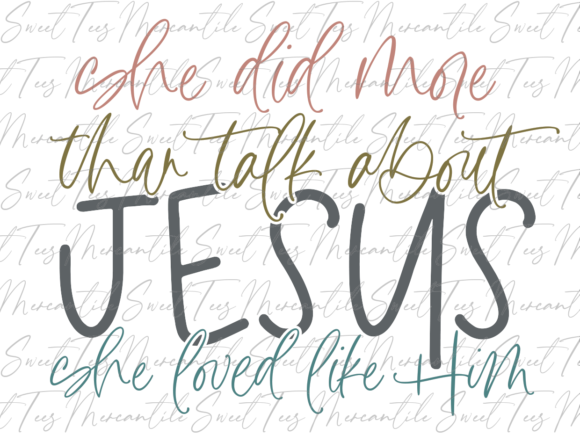
She Did More Than Talk About Jesus: Living Faith Through Action
There’s a difference between saying you believe something and actually living it out. That difference shows up in how you spend your time, where you invest your energy, and what kind of impact you leave behind. She Did More Than Talk About Jesus captures that shift from words to action in a way that resonates deeply with anyone trying to align their daily life with their convictions.
This isn’t about perfection or performing for an audience. It’s about the quiet, consistent choice to let faith shape how you work, create, serve, and interact with the people around you. If you’ve ever felt like your beliefs should show up in more than just Sunday mornings or social media posts, this perspective offers a practical framework for making that connection real.
What This Approach Really Means
At its core, She Did More Than Talk About Jesus points to a life where faith isn’t separate from everyday responsibilities. It’s the woman who runs a small business and treats her clients with integrity even when no one is watching. It’s the freelancer who uses her platform to encourage rather than just promote. It’s the educator who sees her students as whole people, not just test scores.
This concept pushes back against the idea that spiritual life is private or limited to certain settings. Instead, it invites you to let your beliefs shape how you handle a tough email, respond to a difficult customer, or decide which projects to take on. It’s practical, grounded, and surprisingly freeing once you stop trying to separate your faith from your work.
Where People Use This Mindset
The beauty of this approach is that it works in almost any setting. You don’t need a pulpit or a platform to live it out. Here are some of the most common places where it makes a noticeable difference:
- In creative work: Artists, writers, and designers who want their work to reflect honesty and beauty rather than just chasing trends or algorithms.
- In small business ownership: Entrepreneurs who run their operations with transparency, fair pricing, and genuine care for their customers and employees.
- In education: Teachers and tutors who invest in their students’ character and well-being, not just their academic performance.
- In digital spaces: Bloggers, podcasters, and content creators who use their platforms to share real struggles and insights instead of curated perfection.
- In everyday relationships: Parents, friends, neighbors, and coworkers who show up consistently and serve without needing recognition.
Each of these settings offers a chance to move beyond talk and into action. The question isn’t whether you believe something. It’s whether that belief changes how you show up on a Tuesday afternoon.
When This Becomes Most Relevant
There are seasons when the gap between what you say and what you do feels especially wide. Maybe you’re in the middle of launching a project and you’re tempted to cut corners to get ahead. Maybe you’re dealing with a difficult client and your first instinct is to fire off an angry reply. Or maybe you’re just tired and you want to coast for a while.
Those are exactly the moments when She Did More Than Talk About Jesus matters most. It’s not a concept you pull out when everything is easy. It’s a grounding principle for the hard, messy, ordinary hours when no one is applauding. The single mom who chooses patience instead of yelling. The freelancer who delivers more than she promised even when the pay is low. The blogger who writes honestly about failure instead of only sharing wins.
These small, repeated choices build a life that matches your words. Over time, people notice. More importantly, you notice. You start to trust yourself more because you’re not pretending anymore.
Real Scenarios That Bring This to Life
Let’s look at how this plays out in specific situations. These aren’t hypotheticals. They’re the kind of challenges that face most people trying to integrate their beliefs with their daily work.
Scenario 1: The freelancer who values people over profit.
You run a graphic design business. A client asks you to use images they don’t have the rights to. They’re in a hurry and they tell you no one will ever know. Saying yes would be faster and cheaper for them. Saying no means losing the project and potentially the client. Choosing to do the right thing—even when it costs you—is a direct expression of She Did More Than Talk About Jesus. You’re not just saying you value integrity. You’re proving it with your bottom line.
Scenario 2: The educator who sees beyond the lesson plan.
You teach high school English. One of your students is clearly struggling with something outside of class. You could stick to the curriculum and ignore the signs. Instead, you take a few extra minutes to check in, listen, and connect them with resources. That quiet investment won’t show up in test scores, but it might change that student’s path. This is teaching that doesn’t just talk about compassion. It practices it.
Scenario 3: The small business owner who serves with excellence.
You run a local bakery. A regular customer places a large order for a family event, but they have a tight budget. You could tell them no or push them toward a pricier option. Instead, you work with them to create something beautiful within their means. You treat their need as seriously as you would a high-budget client. That kind of service speaks louder than any mission statement.
Who Benefits Most From This Approach
Honestly, anyone can benefit. But certain groups find this mindset especially useful because of the specific pressures they face.
- Creators and artists often wrestle with the tension between authenticity and marketability. This approach gives them permission to stay true to their values without feeling like they’re falling behind.
- Entrepreneurs and small business owners face constant decisions about pricing, hiring, customer service, and marketing. Having a clear anchor helps them make those choices with confidence instead of second-guessing.
- Educators and mentors influence people in ways they may never fully see. Focusing on action over talk helps them prioritize what really matters in their interactions.
- Content creators and bloggers can easily get caught up in metrics and trends. This perspective helps them create from a place of purpose rather than pressure.
- Parents and caregivers often feel like their most important work is invisible. This approach affirms that the small, faithful actions are exactly what build a legacy.
Each of these groups faces situations where the easier choice is to just talk about what matters. The harder—and more rewarding—choice is to actually do it.
What to Consider Before Adopting This Mindset
Before you dive into living out She Did More Than Talk About Jesus in your own context, there are a few things worth thinking through. This isn’t a quick fix or a formula for success. It’s a long-term orientation that requires honesty and patience.
- Expect tension. Not everyone will understand why you make the choices you do. A client may walk away because you won’t compromise. A competitor might cut corners and get ahead faster. That tension is part of the deal, and it’s okay.
- Start small. You don’t need to overhaul your entire life overnight. Pick one area—how you respond to emails, how you treat a specific coworker, how you handle money in your business—and focus on aligning your actions there. Build momentum from there.
- Give yourself grace. You will mess up. You will have days where your actions don’t match your ideals. That doesn’t mean you give up. It means you keep coming back to the principle and trying again.
- Look for community. It’s easier to stay consistent when you have people around you who share the same commitment. That might be a small group, a mentor, or even a few online friends who encourage you to keep going.
- Measure what matters. Success in this approach isn’t about money or fame. It’s about whether your life is becoming more honest, more generous, and more aligned with what you say you believe. Check in with yourself regularly.
Connecting Intentions to Real Outcomes
The shift from talking to doing changes things. It changes how you see yourself, how others experience you, and the kind of work you produce. When you stop trying to sound like someone who cares and start actually caring, your relationships deepen. Your work gains weight. Your decisions become clearer because you have a real anchor.
For the creator who struggles with imposter syndrome, this approach offers a way forward: stop trying to prove yourself and start serving your audience with what you actually have to give. For the entrepreneur who feels pressured to chase every trend, it provides permission to stay focused on what’s true and sustainable. For the educator who wonders if her work matters, it affirms that the quiet investments are the ones that last.
You don’t need a big platform or a perfect plan. You just need to take the next step with integrity. That’s what She Did More Than Talk About Jesus looks like in real life. It’s not flashy. It’s not loud. But it builds something that lasts.
How This Mindset Sticks Over Time
The most convincing argument for this way of living is that it actually works over the long haul. People who consistently align their actions with their beliefs tend to build more trust, attract better opportunities, and sleep better at night. That’s not a marketing claim. It’s just what happens when you stop pretending and start doing.
If you’re someone who wants your life to mean something beyond your own comfort and convenience, this is a path worth considering. It doesn’t require you to be perfect. It asks you to be honest, to be present, and to let your actions speak for themselves.
And that’s something no amount of talk can replace.