Why 'I'm a Dad That Runs on Jesus Cornhole' Is More Than a Slogan
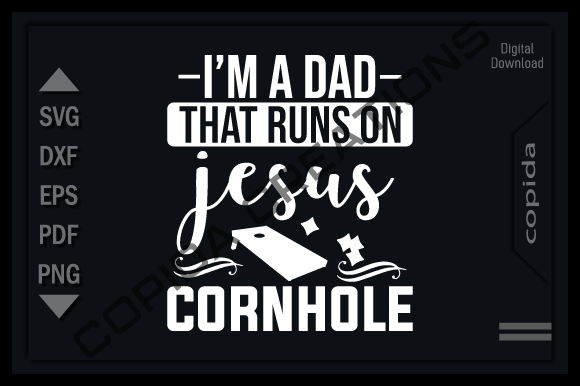
It started as a wooden board at a backyard cookout. Then it became a T-shirt, then a decal, then a full-blown identity statement. "I'm a Dad That Runs on Jesus Cornhole" has moved from niche meme to a surprisingly resonant piece of modern branding. For professionals, creators, and entrepreneurs watching cultural signals, this phrase offers more than comic relief—it reveals a shift in how people express values, build community, and signal belonging through the products they buy and the content they share.
This article unpacks what this statement actually represents, why it connects with a broad and growing audience, and what its rise tells us about larger changes in lifestyle branding, faith-based marketing, and the post-pandemic demand for authentic, low-friction identity expression.
What Exactly Is "I'm a Dad That Runs on Jesus Cornhole"?
At its simplest, the phrase is a declarative identity statement. It bundles three distinct elements together:
- Dad identity – a nod to the everyday reality of fatherhood, often with self-deprecating humor
- Jesus – a clear faith reference, acknowledging a Christian spiritual foundation
- Cornhole – the leisure activity that has grown into a mainstream American pastime, particularly in suburban and social settings
The phrase is often printed on T-shirts, hoodies, flags, and cornhole boards themselves. It functions as both a personal motto and a conversation starter. But calling it just a slogan misses the point. It is a compact representation of a lived identity—one that balances faith, family, and fun without taking itself too seriously.
Entrepreneurs and creators should note: this is not a product. It is a permission structure. It gives people a way to say, "This is who I am, and I don't need to apologize for it."
It Isn't About Cornhole
People who wear or display "I'm a Dad That Runs on Jesus Cornhole" are not necessarily obsessed with the game of cornhole. The sport is a vehicle. It represents leisure, community, and a culture that is unpretentious. Cornhole tournaments, backyard gatherings, and church picnics are the natural habitat for this kind of branding. The game itself is secondary to what it signals: approachability, friendship, and a certain kind of wholesome masculinity.
Why the Market Is Paying Attention
The broader market for faith-infused lifestyle products has been growing for years. But there is something specific happening here. Unlike traditional Christian merchandise—think fish decals, cross necklaces, or WWJD bracelets—this phrasing leans into specificity. It rejects generic piety in favor of a hyper-specific, slightly humorous identity.
This is part of a larger consumer trend: micro-identity branding. People no longer want products that say "Christian." They want products that say "Christian dad who enjoys cornhole and isn't trying to impress anyone." The specificity creates authenticity. It feels real because it is not trying to appeal to everyone.
Professionals in marketing and product development should pay attention to this principle. The most successful D2C brands of the last decade have all mastered the art of speaking to a very specific person, not a broad demographic. This T-shirt does that brilliantly.
Aligning Faith, Family, and Lifestyle Without Preaching
One key observation: the phrase does not proselytize. It declares, but it does not demand. That distinction matters in a cultural moment where many consumers are wary of overt evangelism, yet still want to express faith as part of their daily life. "I'm a Dad That Runs on Jesus Cornhole" works because it frames faith as a personal fuel source rather than a universal mandate. This is a much more palatable approach for modern audiences.
For creators and entrepreneurs looking to build a brand around values, the lesson is clear. You can be deeply value-driven without being preachy. You just need to anchor your message in a specific, relatable context. Cornhole provides that context here.
How This Connects to Broader Lifestyle and Industry Trends
The rise of "I'm a Dad That Runs on Jesus Cornhole" is not happening in a vacuum. Several converging trends make this moment possible.
The Normalization of Casual Leisure as Identity
Cornhole is not an elite sport. It does not require athleticism, expensive gear, or a gym membership. It is accessible to nearly anyone. In a culture that is increasingly tired of performative excellence, casual leisure activities are becoming more central to how people define themselves. Pickleball, board game nights, knitting circles, and cornhole leagues all fall into this category. They are low-stakes, high-connection activities. Branding that taps into these activities feels grounded and human.
The Post-Pandemic Demand for Community
After years of isolation, people are hungry for low-pressure social connection. Cornhole is a natural fit. It is played outdoors or in garages, it allows for conversation between throws, and it is easy to learn. "I'm a Dad That Runs on Jesus Cornhole" is essentially a uniform for that kind of community. It signals that the wearer is open to connection, but within a specific shared value system.
The Rise of "Soft" Masculinity in Branding
There is a growing movement toward redefining masculinity in ways that are not aggressive or competitive. The dad archetype—loving, slightly goofy, grounded—is central to this. "I'm a Dad That Runs on Jesus Cornhole" is a textbook example of soft masculinity branding. It is confident without being confrontational. It is strong without being rigid. It is humorous without being cynical. That balance is hard to strike, but when done well, it resonates deeply with both men and women.
Practical Examples of the Brand in Action
To understand the reach and relevance of this phrase, consider how it appears in real-world contexts:
- Church picnics and youth group fundraisers. Volunteers wear shirts with the phrase, sparking conversations with families and newcomers. It lowers the barrier between insiders and outsiders.
- Social media profile descriptions. Dads in their thirties and forties use the phrase as a bio on Instagram or Facebook. It communicates values in five words, saving them from needing a longer explanation.
- Custom cornhole board sets. Homeowners commission boards with the phrase painted across the top. The boards become a centerpiece for backyard gatherings and a conversation anchor for guests.
- Small business merchandise. Local print shops and Etsy sellers have adopted the phrase as a staple item. It sells consistently, not because of flashy marketing, but because it fills a genuine identity need.
Each of these examples involves low investment, high authenticity. The phrase does not require a big budget or a celebrity endorsement. It spreads organically because it rings true.
What This Means for Entrepreneurs and Creators
If you are building a brand, a product line, or a content platform, the success of "I'm a Dad That Runs on Jesus Cornhole" offers several actionable insights.
Specificity is a Feature, Not a Bug
Many creators worry that being too specific will shrink their audience. The opposite is often true. A specific message attracts a passionate core audience, and that core audience becomes your best marketing channel. This phrase is extremely specific. That is its strength.
Values Should Be Worn, Not Just Written
Digital content is crowded. Physical merchandise, especially apparel and home goods, offers a different kind of connection. When people wear a statement, they become part of the narrative. "I'm a Dad That Runs on Jesus Cornhole" works because it is not just seen on a screen—it is seen on a person. It becomes part of live, face-to-face interaction.
Humor and Faith Can Coexist
For years, faith-based branding has tended toward either reverence or kitsch. This phrase occupies a middle ground that feels more natural to everyday life. It is not making fun of faith, but it is not solemn either. That balance is exactly what many consumers are looking for: a way to express belief without leaving their personality at the door.
Changing Expectations Around Brand Authenticity
The broader consumer expectation has shifted. People no longer trust brands that try to be everything to everyone. They want brands that take a stand, show personality, and admit their limitations. "I'm a Dad That Runs on Jesus Cornhole" does all three. It stands for something (faith, family, fun). It shows personality (self-deprecating dad humor). And it admits its limitations (not trying to appeal to non-dads, non-Christians, or non-cornhole players).
This is the authenticity paradox: the more you exclude, the more you attract. By openly being for a specific audience, you become more credible to that audience, and often, more interesting to outsiders who appreciate the honesty.
Connecting to Larger Developments in Lifestyle Branding
We are in an era where lifestyle brands are increasingly organized around micro-communities. The old model of "one message for everyone" is fading. In its place, we see brands built around specific activities (cornhole, hunting, yoga, running), specific life stages (dad life, empty nesters, college students), and specific values (faith, sustainability, simplicity). "I'm a Dad That Runs on Jesus Cornhole" sits at the intersection of all three. That is why it works.
Entrepreneurs who study this phrase will notice that it does not try to be a movement. It does not ask anyone to join a cause. It simply names a reality. That restraint is part of its appeal. It does not overpromise. It just describes.
What Comes Next
It would be easy to dismiss this as a passing novelty, but the underlying dynamics suggest staying power. The need for specific, value-driven identity products is not going away. If anything, it will deepen as digital life becomes more fragmented and people crave tangible anchors for who they are.
We can expect to see more variations on this formula—"I'm a Mom That Runs on Coffee and Prayer," "I'm a Teacher That Runs on Jesus and Grading," and so on. Each variation is an opportunity for creators to tap into the same psychological need: the desire to declare a complex identity in a simple, shareable way.
Final Observations
"I'm a Dad That Runs on Jesus Cornhole" may have started as a joke or a one-off design, but it has become a case study in modern branding. It shows that you do not need a huge budget to create something that resonates. You need clarity, specificity, and a genuine connection to a real community.
For professionals, creators, and entrepreneurs, the takeaway is clear. The next time you see a phrase that makes you smile—or roll your eyes—look closer. It might be telling you something about where culture is heading. And if you are building something yourself, ask whether you have found your own version of Jesus Cornhole: a specific, value-driven, personality-packed anchor that lets people say, "Yes, that's me."
In a noisy market, that kind of clarity is rare—and valuable.