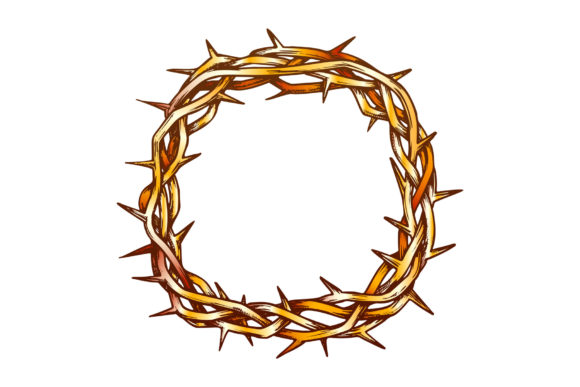
Top-Down View of the Crown of Thorns
Seeing the Crown of Thorns from a top-down angle changes everything. Instead of the familiar profile view—a wreath of twisted branches and sharp spikes—you get a circular, almost architectural composition. This perspective reveals the object as a complete geometric form: a ring of pain that reads like a mandala, a symbol, or a design element. For professionals, creators, and educators working in visual media, faith-based content, or branding, this top view offers a unique way to engage with one of Christianity's most potent symbols. It is not just a religious artifact; it is a visual tool with surprising range and depth.
What Makes the Top View Distinctive
From above, the Crown of Thorns loses its messy, three-dimensional chaos and becomes something far more ordered. The branches form a near-perfect circle, with thorns pointing outward like spokes or inward toward a hollow center. This symmetry is what makes the top view so compelling. Photographers and digital artists often use this perspective to emphasize the wreath's cyclic nature—a visual reminder of eternity, sacrifice, and the circular path of redemption.
The lighting also behaves differently. A top-down shot or rendering catches shadows that radiate from the center, creating a starburst effect. The texture of dried wood and the sharp tips of the thorns become highly detailed, almost tactile. For designers, this means the Crown of Thorns Jesus Christ top view works well as a focal point in layouts, backgrounds, or symbolic graphics. It carries weight without needing explanatory text.
Creative and Digital Design
If you work in graphic design, web design, or digital art, the Crown of Thorns Jesus Christ top view offers a powerful motif. It fits naturally into:
- Branding for faith-based organizations: A clean, top-down crown can serve as a logo or watermark. It is recognizable but subtle enough for modern branding.
- Website headers and hero images: The circular shape draws the eye and creates a strong focal point, especially on minimal layouts.
- Social media graphics: During Lent, Holy Week, or Easter, a top-view crown works for profile frames, post backgrounds, or story overlays.
- Print materials: Bulletin covers, flyers, posters, and devotional booklets benefit from this striking visual.
One designer I spoke with used a high-contrast black-and-white top view for a church's rebranding. "It felt timeless," she said. "It wasn't just a symbol of suffering—it became a mark of identity."
Educational and Devotional Contexts
Educators and religious leaders can use the Crown of Thorns Jesus Christ top view as a teaching aid. In Bible study groups, Sunday school, or seminary classes, showing this perspective helps illustrate the physical reality of the crucifixion. The symmetry and detail invite closer observation and discussion. It moves the conversation from abstract theology to tangible history.
For personal devotion, a top-view image or physical replica placed on a desk or prayer corner serves as a meditation focal point. The circular shape reminds viewers of God's unending love, while the thorns ground them in the reality of sacrifice. Many believers find this view less visceral than a profile shot—it is contemplative rather than shocking.
Marketing and Content Creation
Bloggers, publishers, and content creators covering faith, art, or history will find the Crown of Thorns Jesus Christ top view a natural fit for featured images, article headers, or book covers. Its geometric nature makes it easy to pair with text overlays. The view also works well for video thumbnails, podcast cover art, and email newsletter headers. Because the image carries symbolic weight, it immediately signals the topic's seriousness without needing additional explanation.
If you run an Etsy shop, a print-on-demand store, or a digital marketplace, consider offering top-view designs on:
- Framed prints for home or office
- Notebook covers and journals
- Tote bags and apparel
- Phone cases and laptop skins
The demand for understated religious art is growing, especially among younger adults who prefer subtle symbolism over overt imagery.
Benefits for Communication and Engagement
Using the Crown of Thorns Jesus Christ top view can improve how your audience connects with your content. Here is why:
- Memorability: The circular composition is easy to remember. Viewers retain the shape and its meaning longer than they would a cluttered scene.
- Versatility: The view works across styles—photorealistic, illustrated, minimalist, or abstract. You can adapt it to your brand's voice.
- Emotional resonance: It carries deep meaning without being graphic. This makes it suitable for mixed audiences, including children and those sensitive to explicit depictions.
- Search visibility: The specific phrase "Crown of Thorns Jesus Christ top view" is a targeted keyword that can help your content rank for users seeking this exact visual perspective.
Real-World Use Cases
Let me share a few examples of how different professionals have used this view effectively.
A small church in the Midwest redesigned their website around a single top-view crown image. The image appeared on the homepage, the about page, and the donate button background. The pastor noted that visitors frequently commented on the site's "calm but powerful" feel. The crown became the church's unofficial emblem.
A freelance illustrator created a series of line-art crowns for a Lenten devotional. The top view allowed her to keep the designs simple and reproducible. She sold the set on Gumroad and later licensed it to a publisher. The clean geometry made the illustrations easy to color, resize, and adapt for print.
A religious education director used a top-down photograph of a physical crown during a confirmation class. She projected the image and asked students to describe what they saw. "They noticed the thorns pointing outward," she said. "That led to a discussion about how Christ's suffering extends to all people." The top view facilitated that insight because it showed the crown as something surrounding—not just sitting on a head.
Practical Considerations When Selecting or Using This Image
Whether you are commissioning a new artwork, choosing a stock photo, or creating your own digital illustration, keep these factors in mind.
Resolution and Detail
Because the top view emphasizes texture and fine details, you need high resolution. Blurry or low-quality images will look amateurish. If you are using the crown in print, aim for at least 300 DPI. For web use, ensure the file is optimized but still sharp on Retina displays.
Color and Tone
Most Crown of Thorns Jesus Christ top view images use natural wood tones—brown, tan, and dark gray. But you can stylize the palette. Gold or copper tones work well for luxury branding. Silhouette or black-and-white versions suit minimalist or modern designs. Just ensure the thorns remain visible; they are the defining feature.
Background and Composition
Decide whether you want the crown isolated or placed in a context. A plain white or dark background keeps the focus on the object. Adding a subtle texture, like linen or stone, can evoke a historical feel. Avoid busy backgrounds that compete with the crown's shape.
Licensing and Originality
If you are using a photograph, check the license. Stock sites vary. For commercial use, you may need an extended license. If you create your own version—photographing a real crown or building a 3D model—you own the rights. This is especially valuable for branding where exclusivity matters.
A Final Word on Using This Symbol Well
The Crown of Thorns Jesus Christ top view is more than a niche visual. It is a perspective that invites contemplation, enhances design, and communicates sacrifice and hope in a single glance. For anyone creating content for faith communities, educational settings, or creative markets, this view offers a rich, underutilized resource. Whether you place it on a website, in a classroom, or on a product, treat it with the weight it carries. When used thoughtfully, it resonates far beyond its simple shape.