Jesus Coloring Pages for Adults and Kids: A Creative Movement Redefining Faith, Focus, and Family Connection
In an era where digital saturation competes with a growing hunger for tangible, meaningful experiences, a quiet but powerful creative practice has emerged: the Jesus coloring page for adults and kids. Far more than a nostalgic Sunday school handout, these pages have evolved into a sophisticated tool for mindfulness, intergenerational bonding, and theological exploration. Across Pinterest boards, Etsy shops, and family living rooms, believers and creatives alike are rediscovering the meditative power of pairing sacred imagery with the simple act of coloring. But why this sudden renaissance, and what does it tell us about shifting priorities in how we work, rest, and connect with our faith?
Understanding the Jesus Coloring Page for Adults and Kids
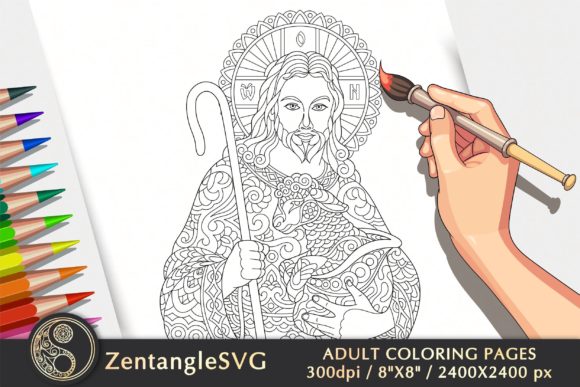
A Jesus coloring page for adults and kids is a printable or digital illustration depicting scenes from the life of Christ, parables, or symbolic Christian imagery—designed for coloring by individuals of any age. Unlike basic children's pages, these illustrations often feature intricate mandala-style borders, detailed anatomical renderings, or contemplative compositions that reward careful attention. For adults, the complexity offers a genuine artistic challenge and a vehicle for stress relief. For children, simplified versions maintain accessibility while introducing them to biblical narratives in an engaging, hands-on format.
What distinguishes this genre from generic adult coloring books is its dual function: it serves simultaneously as a creative outlet, a devotional practice, and a shared family activity. A parent coloring a detailed depiction of the Sermon on the Mount while their child fills in a simpler cartoon version of the same scene creates a unified experience around a common spiritual text. This layered accessibility is precisely why the format has gained traction in homes, churches, and even therapeutic settings.
The Broader Market and Creative Context
The rise of the Jesus coloring page for adults and kids sits at the intersection of several powerful consumer trends. The adult coloring book market exploded in the mid-2010s, driven by research linking coloring to reduced anxiety and improved focus. Simultaneously, the "slow living" movement encouraged people to replace passive screen time with intentional, hands-on activities. What began as a secular phenomenon quickly found a religious audience seeking content aligned with their values.
Creators and entrepreneurs have responded with stunning sophistication. Independent artists now offer collections that rival fine art prints in their compositional quality. Etsy shops dedicated to Christian coloring pages generate consistent revenue from downloadable PDFs, printed books, and even custom commissions. Marketers have recognized that the Jesus coloring page for adults and kids appeals to a demographic that is underserved by mainstream creativity products—faithful consumers who want their leisure activities to reinforce their beliefs rather than compete with them.
Observation: The most successful creators in this space understand that buyers are not just purchasing a coloring page—they are purchasing permission to slow down, a framework for family conversation, and a tangible connection to their faith that feels modern without being secular.
Why People Are Paying Attention
Several converging factors explain the growing attention around the Jesus coloring page for adults and kids. First, there is a documented rise in "contemplative Christianity"—a movement that prioritizes experiential, sensory engagement with faith over purely intellectual assent. Coloring fits this paradigm perfectly, offering a low-barrier entry point into meditative prayer or scripture reflection.
Second, the pandemic permanently altered how families spend time together. With more parents working from home and children engaged in hybrid learning, the demand for shared activities that don't require screens, expensive equipment, or advanced skills surged. A Jesus coloring page for adults and kids requires only crayons, markers, or colored pencils—and a willingness to sit together. This simplicity makes it resilient across economic circumstances and technological access.
Third, there is a growing recognition that traditional religious education for children often fails to engage kinesthetic learners. Coloring provides a tactile, visual, and narrative experience that reinforces Bible stories more effectively than passive listening. Parents and educators have noted that children who color while hearing a story retain details longer and ask more nuanced questions. The adult version serves a similar function for grown-ups: it creates a structured yet open-ended space for reflection that sermon listening or silent prayer may not provide.
Changing Needs, Preferences, and Workflows
The relevance of the Jesus coloring page for adults and kids reflects deeper shifts in how people approach creativity, rest, and spiritual formation. Busy professionals and entrepreneurs often struggle to justify unstructured leisure time. Coloring offers a legitimate, productive-seeming framework for rest—it produces a finished artifact, improves fine motor skills, and can be framed as "creative practice" rather than "doing nothing." For freelancers and creatives who spend hours in front of screens, the analog nature of coloring provides essential sensory variety that reduces eye strain and mental fatigue.
In ministry and educational settings, workflows have adapted as well. Church curriculum developers now routinely include coloring pages as discussion starters, sermon supplements, and quiet activity stations during services. Vacation Bible School programs have replaced some traditional crafts with high-quality illustrated pages that children can complete at their own pace. Youth groups use collaborative large-format Jesus coloring pages for adults and kids as icebreakers and community-building projects.
From a business perspective, the shift has opened new revenue streams. Print-on-demand services allow creators to sell individual pages without inventory risk. Subscription boxes featuring monthly Jesus-themed coloring sets have emerged, combining prints, premium pencils, and devotional prompts. The content is also highly shareable on social media, where timelapse videos of coloring progress generate engagement and algorithm-friendly dwell time. Entrepreneurs who recognize that their audience craves both beauty and meaning have found a willing market.
Practical Examples and Observations
Consider a real-world scenario: a freelance graphic designer with young children. She needs to manage client deadlines while also providing her kids with engaging, screen-free activities. She discovers a high-quality Jesus coloring page for adults and kids that features a complex rendering of the Good Samaritan on one side and a simplified version on the other. While her children color the simpler image, she works on the detailed version during her breaks. At the end of the week, they compare their progress, discuss the parable, and display both pages side-by-side. This single resource has served multiple functions: client stress relief, child education, quality time, and home decoration.
In another context, a small church plant with limited children's ministry resources uses a downloaded Jesus coloring page for adults and kids as the centerpiece of its "Creative Prayer" stations. Adults are invited to color sections of a large-print image while silently praying for specific needs. The activity lowers social barriers for newcomers who may feel uncomfortable with traditional prayer formats. The completed pages are collected and displayed, creating a visual record of the community's intercessions over time.
On the commercial side, an Etsy seller specializing in minimalist Christian art reports that her line of Jesus coloring pages for adults and kids consistently outperforms her standard prints in revenue—not because they are priced higher, but because customers purchase multiple copies for gifts, group activities, and personal use. She notes that the search terms "Christian mindfulness," "Bible verse coloring for adults," and "family devotional activity" frequently lead buyers to her shop. The data suggests that consumers are actively seeking products that integrate faith, creativity, and connection.
Connection to Larger Developments
The trajectory of the Jesus coloring page for adults and kids mirrors broader cultural movements toward intentionality, analog resurgence, and values-aligned consumption. As artificial intelligence and automation reshape creative industries, there is a counterbalancing appreciation for handmade, human-directed processes. Coloring is inherently human—no algorithm can replicate the tactile feedback of a pencil on paper or the personal satisfaction of a carefully chosen color palette.
Moreover, the format aligns with what sociologists call "seeker spirituality"—an approach that values personal exploration over institutional authority. A coloring page does not preach; it invites. It allows the user to engage with biblical material on their own terms, at their own pace, and in their own style. This resonates profoundly with a generation that distrusts rigid religious structures but remains open to spiritual experience.
For creators and professionals, the enduring relevance is clear. The Jesus coloring page for adults and kids is not a passing fad but a sustainable format that meets fundamental human needs: the need for beauty, for quiet, for shared experience, and for connection to something larger than oneself. Those who produce, market, or use these pages are participating in a larger redefinition of how faith is practiced in the 21st century—not as a passive reception of doctrine, but as an active, creative, and communal act.
Looking Ahead Without Speculation
The evidence suggests that the demand for high-quality Jesus coloring pages for adults and kids will continue to grow as creators refine their craft and audiences expand their expectations. Artists are experimenting with cultural diversity in depictions of Christ, historical accuracy in costume and setting, and integration with augmented reality for interactive experiences. Print quality has improved dramatically, with heavier paper stocks that accommodate wet media like watercolor. The market is maturing from generic clip art to genuine artistry.
For the professional reader—whether a marketer seeking to understand consumer behavior, an entrepreneur evaluating product categories, or a creative looking for meaningful work—the lesson is straightforward: when you combine a timeless need (faith) with a proven format (coloring) and a contemporary sensibility (mindfulness, family connection, aesthetic quality), you create a resource that transcends age, income, and technological trends. The Jesus coloring page for adults and kids is not merely a product category; it is a case study in how to serve an audience that wants to create, reflect, and belong.
In a world that often feels fragmented and hurried, the simple act of filling a page with color—together—remains a quietly revolutionary practice. And for those who choose to depict the face of Jesus as they do it, that revolution carries eternal significance.