Jesus Advent Arabesque Decorations: A Sacred Fusion of Art and Faith
The season of Advent is a time of waiting, reflection, and anticipation. For many, it is also a season of beauty—when homes, churches, and communal spaces are adorned with symbols that point toward the coming of Christ. Among the many decorative traditions, Jesus Advent Arabesque Decorations have emerged as a distinctive and meaningful way to blend the geometric elegance of Islamic art with the liturgical rhythms of the Christian calendar. This fusion is not merely aesthetic; it carries deep theological resonance and practical relevance for modern believers and designers alike.
The Intersection of Sacred Geometry and Advent Spirituality
Arabesque art is defined by intricate, flowing patterns of interlacing foliage, geometric shapes, and repeating motifs that suggest infinity and divine order. When applied to Advent decorations, these patterns create a visual language that speaks to the eternal nature of Christ. The repetition of vines, leaves, and stars in Jesus Advent Arabesque Decorations mirrors the cyclical nature of the liturgical year, while the geometric precision evokes the order and harmony of creation.
One of the most compelling qualities of these decorations is their ability to transcend cultural boundaries. By incorporating arabesque elements, Advent decor becomes a bridge between Eastern and Western Christian traditions, and even between Christianity and the broader Abrahamic heritage. This is especially meaningful for congregations or families with multicultural backgrounds, or for anyone who wants to emphasize the universal scope of the Incarnation.
From a practical standpoint, arabesque motifs work beautifully on a variety of mediums: woven textiles, carved wood, etched glass, metallic ornaments, and even digital projections. The patterns themselves are highly scalable, meaning they can adorn a small tabletop Advent wreath or cover the walls of a cathedral without losing their intricate detail.
Historical Roots and Modern Resonance
While the arabesque style flourished in Islamic art from the 9th century onward, its use in Christian contexts is not new. Medieval manuscripts, Byzantine mosaics, and even Renaissance altarpieces often featured interlocking geometric and floral patterns that share a visual kinship with arabesque designs. What makes Jesus Advent Arabesque Decorations distinct is the intentional reclamation of this aesthetic for a specific liturgical purpose. Advent, with its themes of waiting and preparation, pairs naturally with patterns that suggest endlessness—reminding us that the birth of Christ is not a one-time historical event but an eternal reality breaking into time.
In recent years, there has been a resurgence of interest in sacred geometry across faith traditions. Designers and artisans are rediscovering the spiritual depth of patterns that point beyond themselves. For Advent, this means creating decorations that do more than simply look beautiful; they become tools for contemplation. A candle holder adorned with arabesque vines, for example, can draw the eye into a meditative focus, helping the viewer quiet their mind and prepare their heart for the coming of Christ.
Another important characteristic is the use of color. Traditional Advent colors—purple, rose, and white—pair exceptionally well with arabesque patterns. The deep violet of repentance and royalty takes on new dimension when interwoven with gold or silver arabesque filigree. The rose candle for Gaudete Sunday becomes even more luminous when surrounded by lighter, flowing motifs. White for Christmas Eve can be enriched by the subtle repetition of stars and leaves, creating a sense of joyful movement.
Modern Workflows and Applications
Whether you are a church decorator, a liturgical designer, a home crafter, or a digital content creator, Jesus Advent Arabesque Decorations offer a wealth of possibilities. Here are several ways they integrate into contemporary practices:
1. Liturgical Spaces and Church Interiors
Many churches now incorporate projection mapping and digital displays during Advent. Arabesque patterns can be projected onto walls, altars, or ceilings to create immersive environments that change throughout the season. Because the patterns are non-figurative, they do not compete with the central symbols of the Advent wreath or the nativity scene. Instead, they provide a sacred backdrop that supports worship without distraction. For churches on a budget, printable arabesque stencils can be used to decorate banners, paraments, and even bulletin covers with minimal expense.
2. Home Advent Traditions
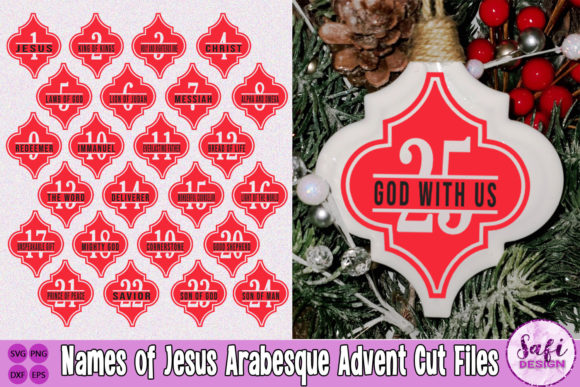
For families, Jesus Advent Arabesque Decorations can transform everyday objects into devotional aids. Consider an Advent calendar where each door opens to reveal a small arabesque pattern along with a scripture verse. Or a set of hand-painted pillar candles with interlacing vines that spiral upward, becoming increasingly detailed as Christmas approaches. Tabletops, mantels, and entryways can be dressed with runner fabrics or placemats featuring these designs, creating a cohesive visual theme that ties the entire season together.
3. Digital Spaces and Online Faith Communities
With the rise of hybrid worship, many congregations now create digital content for Advent. Arabesque patterns work exceptionally well as backgrounds for Zoom prayer meetings, social media graphics, and streaming overlays. Their repeating nature creates a calming, professional look that does not distract from the speaker or the liturgy. Designers can create custom templates using free geometric pattern generators or licensed arabesque vector sets, then adapt them to the specific Advent color palette of their church.
4. Handmade and Artisanal Goods
There is a growing market for handcrafted liturgical items that reflect cultural diversity and artistic integrity. Artisans who specialize in wood carving, metalwork, ceramics, or textile arts can incorporate arabesque motifs into Advent wreaths, nativity sets, and devotional objects. These pieces often become heirlooms, passed down through generations, precisely because they combine timeless craftsmanship with deep spiritual symbolism.
Key Considerations Before Choosing or Creating
If you are considering incorporating Jesus Advent Arabesque Decorations into your space or practice, there are several factors to weigh. First, consider the scale. Large, bold arabesque patterns work best on walls or large banners, while finer, more intricate patterns suit smaller objects like candles or ornaments. The density of the pattern matters too: highly complex designs can be visually overwhelming in a small room, whereas simpler repetitions feel more peaceful and restrained.
Second, think about material and durability. For outdoor or high-traffic indoor spaces, choose materials that can withstand handling and lighting changes. Wood and metal are excellent for permanent or semi-permanent installations, while fabrics and papers are better suited for seasonal use. If you are using digital projections, ensure that the pattern resolution is high enough to remain crisp on larger surfaces.
Third, consider the theological context. While arabesque patterns are not explicitly Christian, they carry strong associations with Islamic art. Some congregations or families may wish to have a conversation about the significance of using these patterns in a Christian setting. Framing them as part of a shared artistic heritage that honors the Creator can help bridge any concerns. Many find that the universal language of geometric beauty actually deepens their appreciation for the Incarnation as a gift for all peoples.
Finally, keep the focus on Advent itself. The decorations should serve the season, not overshadow it. The most effective Jesus Advent Arabesque Decorations are those that draw the eye and the heart toward the waiting, the hope, and the coming Light. If the pattern becomes the main attraction, it may need to be simplified or repositioned.
Practical Examples and Scenarios
Here are a few concrete scenarios to illustrate how these decorations can be used:
- Scenario 1: A small parish with a diverse congregation wants to create an Advent theme around “All Nations Waiting for Christ.” They commission a local artist to paint a large canvas banner using purple and gold arabesque patterns, with a single central cross emerging from the repeating vines. The banner is hung behind the Advent wreath and becomes a focal point for the season.
- Scenario 2: A family with young children creates an “Advent path” on their dining table. They use a long runner fabric with woven arabesque stars. Each evening, they move a small wooden figure of the Holy Family along the path, pausing at different stars to read a short scripture. The pattern visually reinforces the idea of journey and progress.
- Scenario 3: A digital content creator designs a series of Instagram posts for Advent. The background features a subtle rose-colored arabesque pattern, overlaid with white text for each day’s theme. The repeating pattern builds brand recognition and creates a calm, consistent visual identity throughout the season.
Recommendations for Integration
If you are new to this style, start small. Choose one or two key pieces—a wreath, a banner, or a set of candles—and let the arabesque motifs speak for themselves. Avoid mixing too many patterns or styles, as the strength of arabesque lies in its rhythmic repetition. Coordinate colors carefully: deep purple, soft rose, and creamy white are classic, but you can also experiment with navy blue, silver, and even muted terra-cotta for a more earthy feel.
For those who enjoy hands-on projects, consider printing arabesque stencils onto watercolor paper and hand-coloring them with Advent hues. This activity can become a family or small-group devotional practice, where each person colors a motif while reflecting on a scripture or prayer. The finished pieces can be displayed together as a communal art piece that grows throughout the season.
Finally, do not overlook the power of light. Arabesque patterns are especially striking when backlit, shadowed, or projected. Use candles, fairy lights, or uplighting to cast arabesque shadows on walls and ceilings. The play of light and pattern evokes the interplay of darkness and hope that defines Advent itself.
In a world that often rushes toward Christmas, Jesus Advent Arabesque Decorations invite us to slow down and notice the details. They remind us that the wait is not empty, but patterned with meaning. Each recurring leaf, star, and curve points to the One who is both the beginning and the end, the Alpha and the Omega, the Light that shines in the darkness. By weaving these sacred geometries into our Advent traditions, we give ourselves and our communities a visual language of hope that transcends words.