Choosing the Right Christmas Clipart for a Holy Night Nativity Scene
When you search for Christmas clipart featuring the Holy Night and Baby Jesus, you are looking for more than just an image. You are trying to capture a moment of peace, reverence, and tradition. Whether you are designing a church bulletin, creating a social media post for your small business, or putting together a family Christmas card, the right clipart can set the entire tone. But the wrong choice can distract, confuse, or even undermine the message you want to share. Many people assume any nativity clipart will work, only to find that the final result feels off, unprofessional, or mismatched. Let’s walk through the most common pitfalls and, more importantly, how to avoid them so your Holy Night clipart enhances your project rather than detracts from it.
What Exactly Is Holy Night Baby Jesus Clipart?
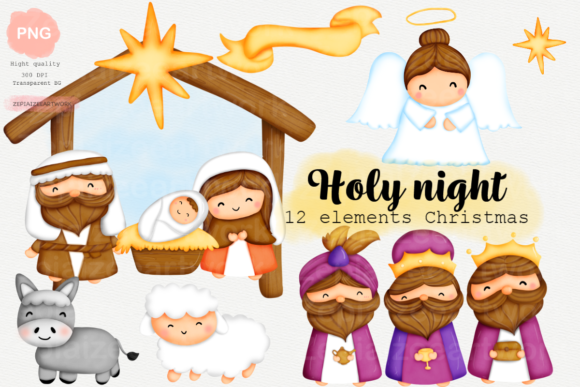
Holy Night Baby Jesus clipart refers to digital illustrations that depict the nativity scene, typically focusing on the newborn Jesus in the manger, often accompanied by Mary, Joseph, the star, and sometimes shepherds or animals. These images range from simple line drawings to richly detailed watercolor-style graphics. People seek them out for religious celebrations, church materials, holiday newsletters, and personal craft projects. The appeal lies in their ability to convey the spiritual heart of Christmas without requiring custom illustration skills. However, not all clipart is created equal, and the differences matter more than you might think.
Overlooking Image Resolution and Quality
One of the most frequent errors is downloading a small, low-resolution clipart and trying to stretch it to fit a larger layout. The result is a blurry, pixelated image that looks unprofessional and distracts from the sacred subject. A Holy Night scene deserves clarity. When you enlarge a tiny file, the edges become jagged, and the details in Baby Jesus’s face or the manger straw turn into a messy blur. Always check the file dimensions before downloading. Look for images that are at least 300 DPI for print projects. For digital use, a resolution of 150 DPI or higher is safer. If the clipart looks small in the preview, it will likely look worse when you scale it up.
Ignoring the Style and Aesthetic Fit
Not every nativity clipart works with every project. A cartoonish, bright-colored Baby Jesus might be fine for a children’s activity sheet, but it feels out of place on a formal church announcement or a memorial Christmas card. On the flip side, an overly ornate, dark, and dramatic illustration might overwhelm a simple flyer. Take a moment to assess the overall mood you want to create. Are you aiming for warmth and simplicity, or grandeur and reverence? Match the clipart style accordingly. For example, if your brand or project uses clean, modern typography, choose clipart with simple lines and muted colors. If your layout is rustic and textured, a watercolor or hand-drawn style will feel cohesive.
Forgetting to Check Licensing and Usage Rights
This mistake catches many beginners and even experienced creators off guard. You find a beautiful clipart of the Holy Night, download it, and use it in your promotional materials or on your website. Later, you discover it was only licensed for personal use, not commercial use. This can lead to legal notices, fines, or at the very least, a takedown request. Always read the license agreement. Some clipart is free for both personal and commercial projects, while others require attribution or a paid license. If you are a small business owner or marketer, assume you need a commercial license unless stated otherwise. When in doubt, contact the creator. It saves headaches and protects your reputation.
Crowding the Composition with Too Many Elements
The Holy Night scene is inherently peaceful. But when you combine multiple clipart pieces, text, borders, and decorative elements, the design can become chaotic. A common mistake is trying to include every traditional symbol: the star, the manger, the animals, the shepherds, the wise men, and a glowing background all in one small space. Instead of evoking awe, the layout feels busy and hard to read. Give your main subject, Baby Jesus, room to breathe. Use negative space intentionally. Let the clipart be the focal point and arrange other elements around it, not on top of it. For example, place the nativity clipart centered on a clean background and add a simple title above or below. Less really is more when you want people to pause and reflect.
Neglecting Background Transparency
Many clipart images come with a solid white or colored background box. If you place that into a design that has a different background color, you end up with an ugly white square framing your Holy Night scene. This looks sloppy and unfinished. Whenever possible, choose clipart with a transparent background, usually in PNG format. This allows the image to blend seamlessly into your project. If you only have a JPEG with a solid background, you can sometimes use image editing software to remove the background, but this takes extra time and skill. Save yourself the effort by selecting PNG clipart with transparency from the start.
Start with a Clear Vision of Your Final Use
Before you search, know exactly where the clipart will appear. Is it for a printed bulletin, a digital invitation, a website header, or a physical craft? Print requires higher resolution than digital. A website header might need a wider aspect ratio. A craft project might benefit from a simpler outline that is easy to cut. When you know the format, you can filter your search more effectively. For instance, if you are making a coloring page, look for black-and-white line art. If you are designing a Facebook post, a square or vertical orientation might work best.
Look for Consistency in a Set
If your project uses multiple images, such as a series of Advent posts or a multi-page church program, try to find a clipart set that offers consistent styling. Mixing a realistic nativity with a flat vector star and a watercolor border creates visual dissonance. Many artists sell themed sets that include a stable, Mary, Joseph, Baby Jesus, and a star in the same cohesive style. Using a set saves time and ensures a professional, unified look. Even if you only need one image now, buying a set gives you options for future projects.
Test the Clipart in Context Before Finalizing
Always preview the clipart within your actual layout before committing. Place it next to your text, your other graphics, and your background. Does it stand out clearly? Is the color palette harmonious? Does the size feel balanced? Sometimes an image that looks perfect on its own becomes too dark or too faint when combined with other elements. Make adjustments early. You might need to lighten the clipart slightly, add a subtle shadow, or adjust the contrast. Testing prevents last-minute surprises and saves you from reprinting or re-editing.
What to Check Before You Download or Buy
- File format: Prefer PNG with transparency over JPEG. SVG is great if you need to resize without losing quality.
- Resolution and dimensions: Confirm the pixel size or DPI meets your needs. For print, aim for at least 300 DPI at the final print size.
- License terms: Read whether it allows commercial use, requires attribution, or restricts modifications.
- Style compatibility: Compare the clipart style to your existing design elements. Look for similar line weights, color tones, and level of detail.
- Source credibility: Purchase or download from reputable sites or known artists. Free clipart from random sources may carry hidden licensing issues or poor quality.
- Editable elements: Some clipart comes with separate layers or components that you can rearrange. This is useful if you want to customize the composition.
Getting the Most Out of Your Holy Night Clipart
Once you have selected a high-quality, appropriately licensed clipart of Baby Jesus in the Holy Night, use it with intention. Place it where it naturally draws the eye, usually at the top or center of your layout. Pair it with typography that complements its mood, something classic and readable rather than overly decorative. Consider using a soft color palette that echoes the warm, peaceful feeling of the nativity. If you are creating a digital post, a subtle glow effect around the star or manger can add depth without overwhelming the image. For print, a slight texture overlay on the background can give the design a tactile, handmade feel.
Remember that the goal of using Christmas clipart centered on the Holy Night and Baby Jesus is to communicate a message of hope, humility, and love. Every design choice you make should support that message. When you avoid the common mistakes of poor resolution, mismatched style, licensing oversights, cluttered compositions, and opaque backgrounds, your project will look polished and intentional. Your audience will connect with the image rather than being distracted by technical flaws. Whether you are a blogger, a teacher, a small business owner, or someone creating a personal keepsake, taking a few extra steps in the selection process makes a meaningful difference.
The right Holy Night clipart does not shout for attention. It invites viewers into the quiet wonder of that first Christmas. By choosing wisely, you honor both the subject and the people who will see your work. And that is the best gift your design can give.